

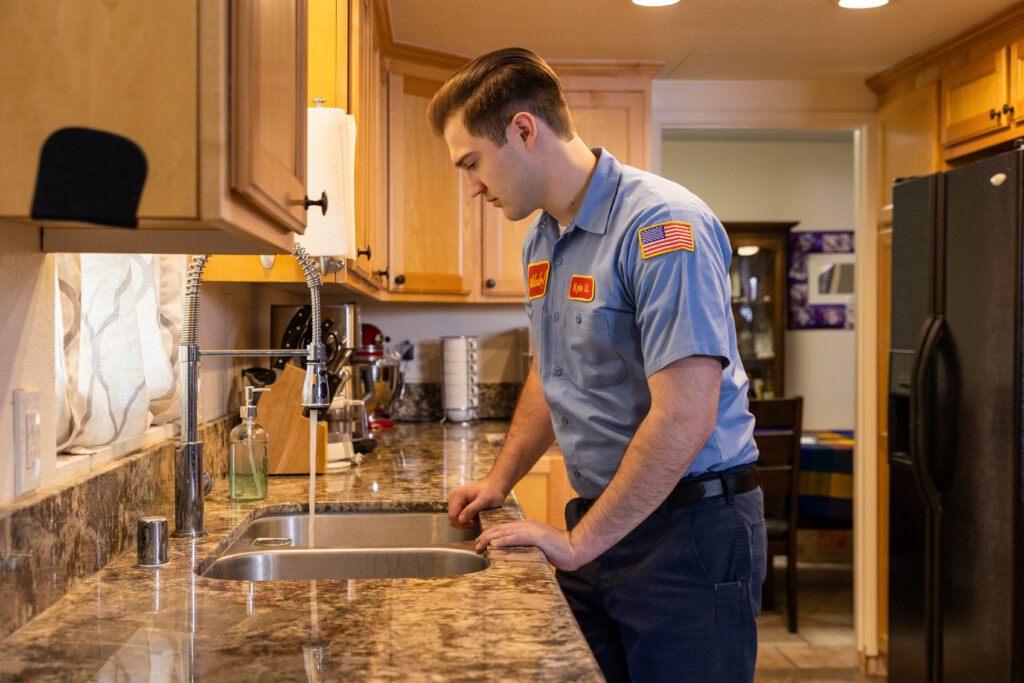
A clogged kitchen drain is one of the most common (and frustrating) plumbing problems in any home. Whether it’s slow-draining water, standing water, or bad smells rising from the sink, you need to act fast before it gets worse.
Here’s your step-by-step guide to clearing the clog — and knowing when to call a pro.
🚨 Signs Your Kitchen Drain Is Clogged
Before you dive in, confirm it’s really a clog. Common signs include:
- Water draining slowly or backing up
- Gurgling sounds from the pipe
- Unpleasant odors (often from food buildup)
- Standing water in the sink
- Garbage disposal not draining
🛠️ 5 DIY Ways to Clear a Clogged Kitchen Drain
1. Boiling Water (for grease & soap clogs)
- What to do: Boil a full kettle of water and pour it directly into the drain in two to three stages.
- Why it works: Great for breaking up grease, soap scum, and minor blockages.
Note: Don’t use this method if you have PVC pipes — it can weaken the plastic.
2. Baking Soda + Vinegar
- What to do:
- Pour 1/2 cup baking soda down the drain.
- Follow with 1 cup white vinegar.
- Cover with a drain plug or cloth and let it fizz for 15–20 minutes.
- Flush with hot water.
- Why it works: This creates a natural chemical reaction that can break down organic material and deodorize your pipes.
3. Use a Plunger
- What to do:
- Fill the sink with a few inches of water.
- Create a tight seal and plunge vigorously for 30–60 seconds.
- Pro tip: Use a flat-bottomed sink plunger, not the one for toilets.
4. Snake the Drain
- What to do:
- Insert a handheld drain snake or zip-it tool into the drain.
- Twist and pull out hair, food, and gunk.
- Flush with hot water.
- Why it works: Perfect for blockages just beyond the trap.
5. Clean the P-Trap (Advanced)
- What to do:
- Place a bucket under the sink.
- Use a wrench to loosen the slip nuts on the trap.
- Remove and clean out debris.
- Reattach and test for leaks.
Only try this if you’re comfortable working under the sink.
💣 What Not to Do
- ❌ Don’t pour chemical drain cleaners like Drano in your kitchen sink — they can corrode your pipes and damage your garbage disposal.
- ❌ Don’t ignore persistent clogs — they can lead to pipe damage or backups.
🧽 Preventing Future Clogs
- Use a sink strainer to catch food particles.
- Avoid pouring grease or oil down the drain — it hardens and traps debris.
- Run hot water down the sink weekly.
- Grind ice cubes + citrus peels in the disposal monthly to clean the blades.
Call a pro if:
- You’ve tried multiple methods and the clog returns
- There’s standing water you can’t drain
- You smell sewage or see multiple drains clogging at once
- You suspect a main line or venting issue
Professional plumbers have motorized snakes, hydro-jetting tools, and cameras to diagnose deeper issues — fast and safely.
🧰 Tools You Can Keep on Hand
- Plunger (flat-bottom for sinks)
- Baking soda & vinegar
- Drain snake or zip-it tool
- Bucket, wrench, and gloves
- Sink strainer or stopper
💬 Quick FAQ
Q: Can I use my garbage disposal if the sink is clogged?
A: No — running it could make things worse or damage the motor. Try clearing the clog first.
Q: Is it safe to use bleach?
A: Bleach doesn’t clear clogs and can react with other cleaners dangerously. Stick to natural solutions or call a pro.
Q: How much does it cost for a plumber to clear a kitchen drain?
A: Expect $100–$300+ depending on severity, location, and tools required.
Got a stubborn clog you can’t fix? Don’t wait until it backs up your entire kitchen. Call a licensed local plumber for same-day help and get your sink flowing again.